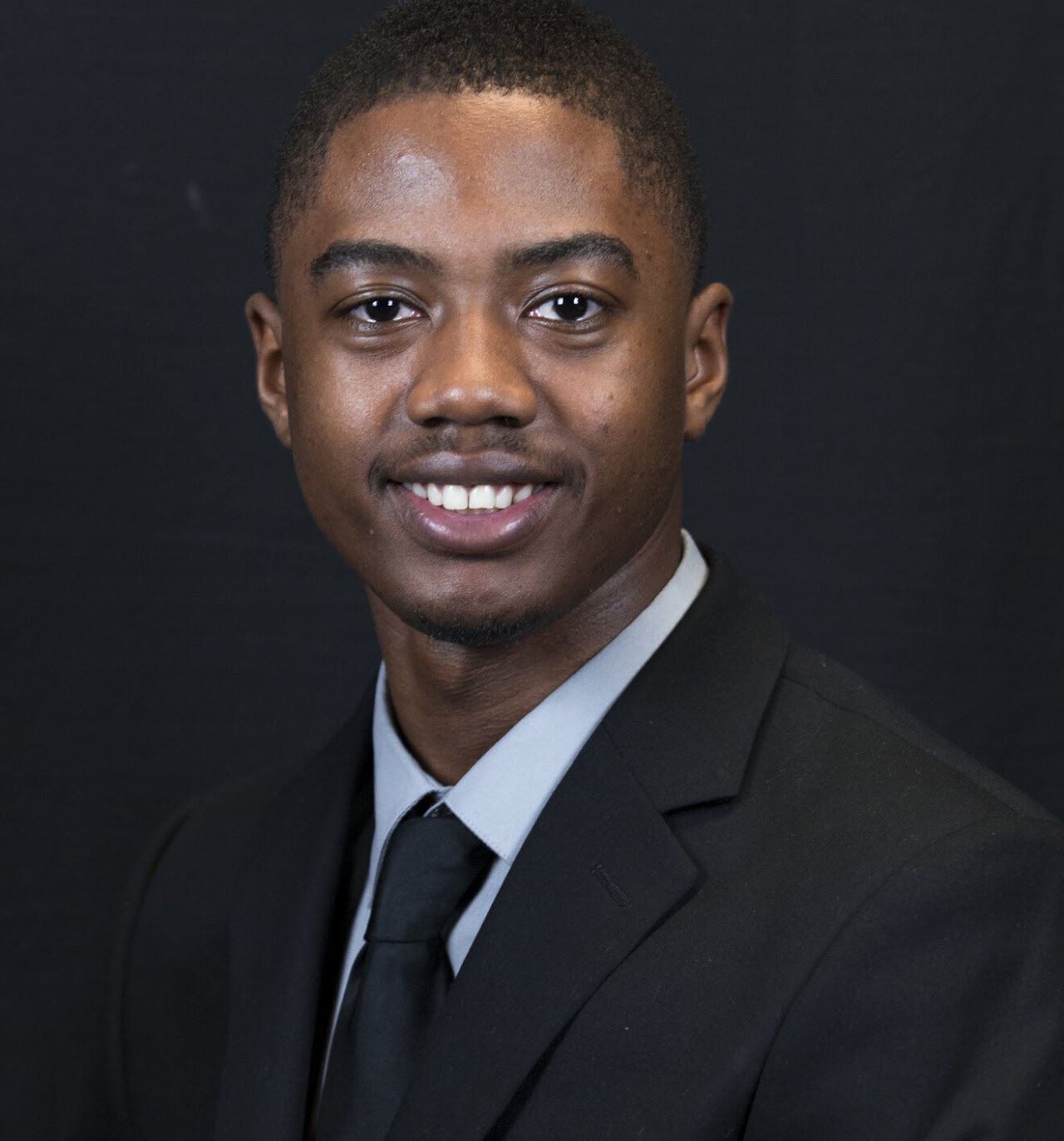
Olawale (Wale) Salaudeen
Pronouncing my name (roughly): oh-la-wah-ley (Olawale) or wah-ley (Wale).
My full name is Olawale Salaudeen; effectively everyone calls me Wale. Generally speaking, if you are writing my name down in any non-conversational setting, I prefer Olawale. My last name is pronounced roughly sah-lah-oo-deen.
I share my first name, at least colloquially, with the incredible rapper and lyricist Wale, although our full first names are technically different: Olawale vs. Olubowale.
Correct pronunciation is entirely optional, as long as I know you're referring to me. The pronunciation someone uses often reflects how we know each other, where they first encountered my name, or who they learned it from, which I find kind of fun.
Some people nevertheless feel compelled to work very hard to pronounce it “correctly.” I should note that I cannot quite pronounce my first name correctly in my English accent either. I have to switch to my Yoruba accent. Do with that what you will :)
Postdoc, Microsoft Research
Electrical and Computer Engineering and (by courtesy) Computer Science
University of Illinois at Urbana-Champaign
Olawale (Wale) Salaudeen is an incoming Assistant Professor at the University of Illinois at Urbana-Champaign and a Postdoctoral Researcher at Microsoft Research. He was previously an AI Center Fellow at Schmidt Sciences, a Postdoctoral Researcher at MIT in the Healthy ML Lab, and a Postdoctoral Scholar at the Eric and Wendy Schmidt Center at the Broad Institute of MIT and Harvard. He earned a Ph.D. in Computer Science from the University of Illinois at Urbana-Champaign and the Stanford STAIR Lab.
His research is concerned with the scientific foundations of AI systems that have positive societal impact. A central question underlying this goal is one of generalization: when can we know that an AI system will do something we have never directly observed it do in a particular context? He approaches this question by developing the science of valid measurement and prediction of AI capabilities and risks, studying the mechanisms that govern AI behavior and generalization, and developing algorithms and interventions that help AI systems remain reliable as conditions change. His work has appeared in leading AI and machine learning venues and received a Best Paper Award at the NeurIPS 2025 Workshop on Evaluating the Evolving LLM Lifecycle.
He has received a Sloan Scholarship, a Beckman Graduate Research Fellowship, a GEM Associate Fellowship, and an NSF Miniature Brain Machinery Traineeship. He has interned at Sandia National Laboratories, Google Brain, Cruise LLC, and the Max Planck Institute for Intelligent Systems. He received a B.S. in Mechanical Engineering from Texas A&M University.
Olawale (Wale) Salaudeen is an incoming Assistant Professor at the University of Illinois at Urbana-Champaign and a Postdoctoral Researcher at Microsoft Research. He was previously at Schmidt Sciences, MIT, and the Broad Institute. He earned a Ph.D. in Computer Science from the University of Illinois at Urbana-Champaign and the Stanford STAIR Lab.
His research is concerned with the scientific foundations of AI systems that have positive societal impact. A central question underlying this goal is one of generalization: when can we know that an AI system will do something we have never directly observed it do in a particular context? He approaches this question by developing the science of valid measurement and prediction of AI capabilities and risks, studying the mechanisms that govern AI behavior and generalization, and developing algorithms and interventions that help AI systems remain reliable as conditions change.
Olawale (Wale) Salaudeen is an incoming Assistant Professor at the University of Illinois at Urbana-Champaign and a Postdoctoral Researcher at Microsoft Research. He earned a Ph.D. in Computer Science from the University of Illinois at Urbana-Champaign and the Stanford STAIR Lab. His research is concerned with the scientific foundations of AI systems that have positive societal impact. A central question underlying this goal is one of generalization: when can we know that an AI system will do something we have never directly observed it do in a particular context?
Research
I am broadly interested in the scientific foundations of AI systems that have positive societal impact. Much of my work centers on understanding generalization in modern AI, or how systems behave beyond the examples, environments, and conditions on which they were developed or directly evaluated. I study when and why systems generalize, what properties of a system tell us about generalization, how we can develop methods that cause systems to generalize according to the objectives and principles we intend, and how these questions inform consequential decisions about the roles AI systems play in society.
I’m especially excited about:
Algorithms for improved generalization in AI (incl. causality and compositional generalization)
I'm interested in pre- and post-training methods that push models to generalize according to the underlying objectives, principles, or mechanisms we care about, rather than relying on surface-level cues or exploitable proxies. For example, how can we train systems to infer and pursue the intent behind a reward rather than merely optimize for the easiest way to obtain it? More broadly, I want to understand how training objectives, representations, environments, and interventions shape the kinds of generalization that emerge. I'm especially interested in how and if tools from causal representation learning and mechanism identification, distributionally robust optimization, and information theory can help address these questions.
New paradigms of generalizable AI evaluation
I'm interested in rethinking how we study AI systems, rather than primarily studying the limitations of existing benchmarks or other mechanisms for hill-climbing within current evaluation paradigms. Many of our evaluation norms were developed for very different kinds of systems and use cases, and it is not obvious that their underlying assumptions should continue to hold. This means developing new technical approaches that engage directly with what is distinctive about modern AI systems. For example: evaluation through intervention rather than observation alone, adaptive experiments tailored to each individual system being studied, methods for mapping spaces of possible behavior rather than performance on a fixed task distribution, and approaches that combine observational and interventional evidence.
AI and society (incl. AI for Health and Medicine)
I'm interested in how our understanding of generalization should inform consequential decisions about AI systems: when we should trust models outside the settings in which they were developed, how uncertainty about generalization should shape deployment and policy decisions, and what technical, institutional, and monitoring infrastructure is needed to mitigate the effects of generalization failures in high-stakes domains such as health and medicine.
Experience










Selected Honors
- Best Paper, NeurIPS 2025 Workshop on Evaluating the Evolving LLM Lifecycle
- Schmidt Sciences AI Center Fellowship
- Postdoc Scholar, Eric and Wendy Schmidt Center, Broad Institute
- NeurIPS 2025 Top Area Chair
- NYU Tandon Faculty First-Look Fellow
- Georgia Tech FOCUS Fellow
- Sloan Scholarship
- Beckman Graduate Research Fellowship
- GEM Associate Fellowship
- NSF Miniature Brain Machinery Traineeship
- ICML 2022 Top Reviewer (10%)
Selected Recent News
Older News
Fun Facts
I was born in Nigeria and moved to Dallas, Texas at a young age. I played basketball and water polo in high school. I'm a loyal (if perpetually disappointed) Dallas sports fan, a cinephile, a social dancer (Latin and swing mostly), and a regular at live standup comedy. I'm full of hot takes, most of which I wouldn't die on, but am always eager to share and defend for fun. I also once won an intramural cornhole championship.